Cantherellus
(Chantrelle-numerous species)
Edibility: Choice
When and Where: Very common under pine or mixed hardwood forests throughout Southeastern North America, summer into fall. This is one of the easiest to recognize species due to its very shallow gill structure. All chantrellelles are edible but some are very small. No one has EVER been able to figure out how to cultivate chantrelles and who ever does will be very very wealthy indeed!
Edibility: Choice
When and Where: Very common under pine or mixed hardwood forests throughout Southeastern North America, summer into fall. This is one of the easiest to recognize species due to its very shallow gill structure. All chantrellelles are edible but some are very small. No one has EVER been able to figure out how to cultivate chantrelles and who ever does will be very very wealthy indeed!
Chicken Mushroom
Edibility: Choice for some; belly ache for others.
When and Where : a.k.a. sulpher shelf. On stumps, trunks, and logs; also on living trees and buried roots. May-November. Note: many people are sensitive to this species, especially when collected from Canadian hemlock or pine. Eat a small amount first before you over-indulge to prevent potential belly upset!
Edibility: Choice for some; belly ache for others.
When and Where : a.k.a. sulpher shelf. On stumps, trunks, and logs; also on living trees and buried roots. May-November. Note: many people are sensitive to this species, especially when collected from Canadian hemlock or pine. Eat a small amount first before you over-indulge to prevent potential belly upset!
Coprinus comatus:
(Shaggy Mane)
Edibility: Choice when young
When and Where: In fields, lawns and waste places, during warm weather in temperate climates. Shaggy manes often form fairy rings in lawns and pastures.
Edibility: Choice when young
When and Where: In fields, lawns and waste places, during warm weather in temperate climates. Shaggy manes often form fairy rings in lawns and pastures.
Morchella
(
Morel)
Edibility: Choice
When and Where : In mixed hardwood forest throughout the Eastern United States, March thru May. This is THE premiere edible. It is difficult to mistake and absolutely delicious. Morchella boasts the fastest growing mycelium of any know species of fungus; you can literally watch it run across a petri plate. It is also extremely difficult to cultivate, making demand even higher among gourmet chefs.
Edibility: Choice
When and Where : In mixed hardwood forest throughout the Eastern United States, March thru May. This is THE premiere edible. It is difficult to mistake and absolutely delicious. Morchella boasts the fastest growing mycelium of any know species of fungus; you can literally watch it run across a petri plate. It is also extremely difficult to cultivate, making demand even higher among gourmet chefs.
Lactarius corrugis: Milky Cap
Edibility: Choice
Where and When: Summer to fall in Eastern temperate forests under mixed hardwoods, especially oak. This species exudes copious amounts of fishy smelling latex when bruised. The latex stains brown. Look alike species have a latex that is extremely acrid and burns the tongue; think "battery acid". This species is among the most common and delicious edibles in Eastern forests. When well cooked, the species takes on a savory flavor that is well... to die for!
Edibility: Choice
Where and When: Summer to fall in Eastern temperate forests under mixed hardwoods, especially oak. This species exudes copious amounts of fishy smelling latex when bruised. The latex stains brown. Look alike species have a latex that is extremely acrid and burns the tongue; think "battery acid". This species is among the most common and delicious edibles in Eastern forests. When well cooked, the species takes on a savory flavor that is well... to die for!
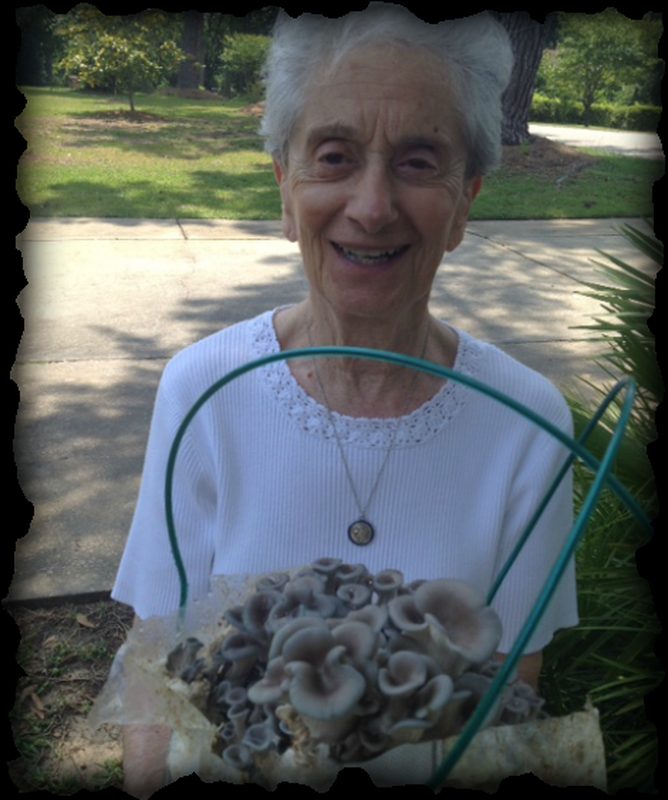
Pleurotus ostreatus (Pearl Oyster, Tree Oyster)
Ediblilty: Choice
Where and When: Almost year round in temperate forests. This species is common on hardwood trees and often produces huge flushes. Among the most heat and cold tolerant of all wild mushrooms it is not uncommon to find oyster mushrooms in the dead of winter in the mountains of Western North Carolina
Ediblilty: Choice
Where and When: Almost year round in temperate forests. This species is common on hardwood trees and often produces huge flushes. Among the most heat and cold tolerant of all wild mushrooms it is not uncommon to find oyster mushrooms in the dead of winter in the mountains of Western North Carolina
Grifola frondosa (Maiatake, Hen of the Woods)
Ediblilty: Choice
Where and When: Late summer to Late fall. This species forms on the roots of dying or dead oak trees. It blends in with the leaf litter and can be hard to see. Sometimes attaining enormous size (the cluster shown here was 60 lbs!) Maiatake is sought after by mycophiles and chefs alike. Cook this species for a LONG TIME for best flavor. 45 minutes on med to high heat or try it in a crock pot soup.
Ediblilty: Choice
Where and When: Late summer to Late fall. This species forms on the roots of dying or dead oak trees. It blends in with the leaf litter and can be hard to see. Sometimes attaining enormous size (the cluster shown here was 60 lbs!) Maiatake is sought after by mycophiles and chefs alike. Cook this species for a LONG TIME for best flavor. 45 minutes on med to high heat or try it in a crock pot soup.